By Elizabeth R. Auma K, Trade Policy Leader/Bridging Policy, People & Purpose/ Founder, Hearts&Trade
A couple of years ago I participated in a meeting where one delegate complained that, despite being a Very Important Person (VIP), he had not been accorded the diplomatic courtesies he expected. Other VIPs in the room who had faced the same challenge nodded their heads in agreement. Indeed diplomats travel across borders representing their countries’ interests. Because of the nature of their work, they are accorded certain privileges and courtesies that make it easier for them to move, engage and perform their responsibilities.
Recently as I sipped a warm cup of tea that scenario played in my mind then I thought- If trade is important to national development, do our systems treat the people who actually conduct that trade as though their work matters?
I am not suggesting that every trader should be given a diplomatic passport. I am sipping my tea and thinking through a trade policy lense. A diplomat carries a country’s interests and image abroad. A trader also carries that country’s economic interests. Every time a Ugandan businessperson enters a foreign market, meets a buyer, participates in an exhibition, supplies a product or signs a contract, they are connecting Uganda to another economy.
The work may look different, but both are contributing to the country’s interests beyond its borders. In fact, the taxes, investments, jobs and foreign exchange generated through trade help sustain many of the very public institutions and diplomatic missions that represent us abroad.
So what does it mean for a trader to be under diplomatic cover? It would not be a diplomatic passport in the literal sense, but a system that recognizes the importance of making legitimate trade easier, faster, more predictable and less costly. A trader should not have to navigate unnecessary bureaucracy simply to do what we encourage them to do: enter a market, sell a product, find a partner or build a business relationship.
Even so, I appreciate that diplomatic privileges come with responsibility. A diplomat is expected to conduct themselves in a way that protects their country’s image and interests. The same should apply to traders. Many countries already recognize this diplomatic treatment of traders through mechanisms such as Authorized Economic Operator programmes, where traders that demonstrate compliance and reliability can benefit from simplified procedures. They have, in a sense, earned a higher level of trust and facilitation.
So, what is stopping us from asking the same question more broadly? Traders who benefit from greater facilitation must also meet their side of the bargain. They must meet quality standards, comply with laws and regulations, honour contracts, pay what is due and protect the reputation of the country whose products they carry.
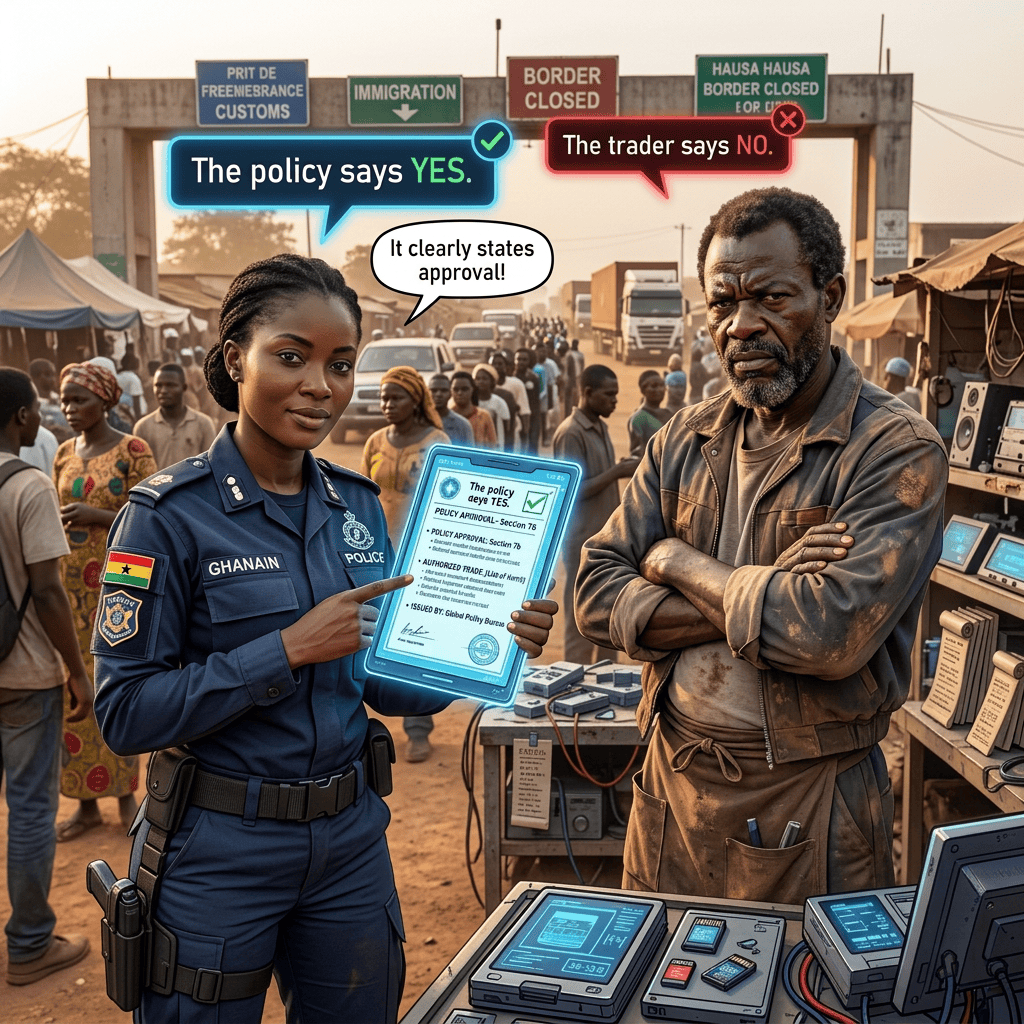
Unfortunately, when a trader is unnecessarily delayed at a border, loses a contract because of bureaucracy, faces inconsistent requirements or spends more time navigating procedures than doing business, the trader does not bear the cost alone. The country loses. Sometimes, a business that could have become a successful exporter simply gives up.
We often speak about economic diplomacy. Its time we equally spoke about the diplomatic treatment of the trader. Every trader crossing a border connects economies in one way or another. Every product on a foreign shelf tells a story about where it came from. Every business relationship created across a border strengthens ties between countries, and every unnecessary barrier that a trader faces weakens them. It is time to rethink trade facilitation not simply as a technical exercise in reducing border procedures, but as a strategic investment in the people who carry our economies across those borders.
From my cup of hot tea reflection, I concluded that trade facilitation is the diplomatic passport that lets legitimate traders do what we have asked them to do: represent, connect, trade and grow. Let us open the discussion on diplomatic treatment of traders.




Leave a Reply