By Elizabeth R. Auma K, Trade Policy Leader/Bridging Policy, People & Purpose/ Founder, Hearts& Trade
More than ever before, instead of the usual prices below a dollar, there is a new price tag at all fuel stations. It is not just the increasing figures, but a simple, clear message: whether least developed, developing, or developed, no country can survive on its own.
Mama Sarah has never heard of the Strait of Hormuz, yet its effects are showing up on her table. They determine how much food she can serve for dinner while preserving some amidst rising costs, and how many journeys she can afford to make in a day due to the hike in transport fares. As a trade policy leader, neither had I heard of the Strait of Hormuz until pump prices started rising beyond what my pocket could afford. Then the news emerged: the name that determined the fuel prices was the Strait of Hormuz. The Strait of Hormuz did not even know its importance on the world map until its functionality was decided on by a few countries.
When I first heard the term global village, it sounded like one of those big trade policy slogans; lovely to mention in every speech. But now, its true meaning is felt even in my ancestral home, Loro, Oyam. Loro is not visible on the world map, yet the spillover effects of the Strait of Hormuz’s non-functionality have not spared it.
The global village simply means that there is no real boundary between my ancestral home and the diplomat in a high-class city. The road networks and buildings may be different, but the impact is shared. The difference, perhaps, is in who pays the higher price at the start. Mama Sarah pays for her fuel directly. The policymaker’s fuel is often paid for by many Mama Sarahs. This is the reality of the global village: though shared impact, different burdens.
In moments like this, my instinct as a trade policy leader is to say, ” We must go back to the drawing board.” But then a harder question arises: how long does it take for policy to respond while Mama Sarah’s entire value chain is already being negatively affected? Policy response time often lags behind real-time economic shocks. Just to help appreciate this better, I recall a time when we engaged the manufacturers over a policy issue. The government said, Let us give feedback in ‘one week’, and the leader responded we need a Policy action ‘yesterday’, not in one week.’
The global village reminds me of the story of Joseph in the Bible. Though it may sound new in our time, in historical trade policy, it is far from new. Joseph told Pharaoh that Egypt was blessed, but a time would come when the world would depend on its reserves. In simple terms, Joseph was designing a resilience strategy.
So I ask:
- How prepared are we for sustained Strait of Hormuz closure effects?
- What is our resilience strategy?
COVID-19 taught us lessons, among them, the importance of foresight and preparedness. Somewhere along the way, we became comfortable again. Now, disruption is teaching us once more. But for how long can we endure the impact?
Joseph’s message is simple: Build reserves not just for your country, but for a wider audience. In African Traditional Society, food was reserved after harvest not for hoarding or higher prices, but for continuity: for the next planting season and for times when the sun would be stronger than the rains and the soil too hard to support new growth. For there was always a time when the community needed to survive, not for one man’s sake but for humanity’s identity.
Trade sustainability teaches us that reserves alone are not enough. Strategic reserves, diversified options, supply routes, and regional cooperation are no longer optional; they are survival tools. However, productive and sustainable alternatives are not built in the middle of a crisis. They are built when foresight tells you that disruption will come. And amidst a crisis, they are strengthened.
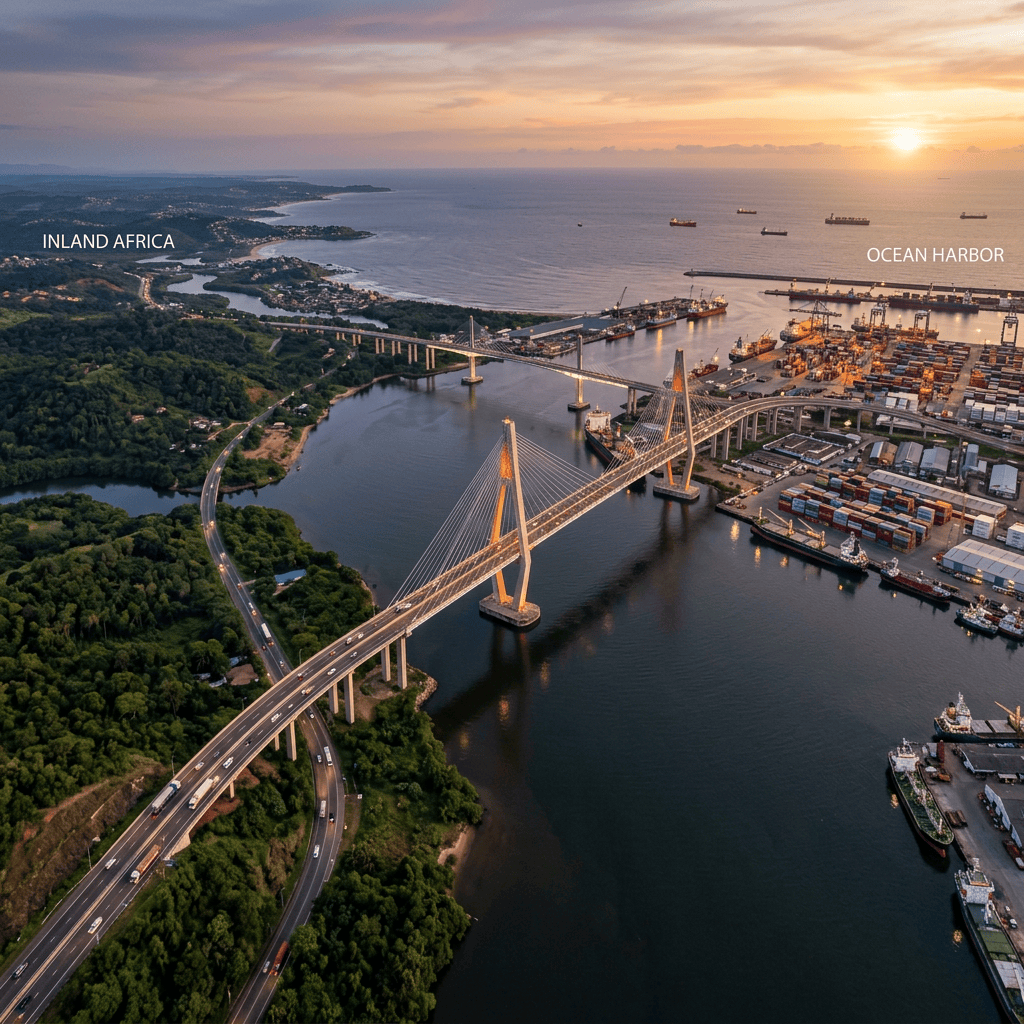
The global village is not so different from my village. When a village bridge is cut off, life is disrupted immediately. The problem may look small to the world, but the ability to respond without collective effort becomes complex at the local level.
Today, the world’s bridge is under strain. But perhaps there is something the global village can learn from my village: The power of coming together quickly, intentionally, and with shared responsibility to rebuild what connects us, not to hoard and see who gains the most, but for shared prosperity. After that, the chiefs return to being chiefs to ensure order, and the farmers return to ensuring there is food for all. That is why I always say that trade policy is beyond numbers. It is about how global decisions affect local lives.

 Hearts & Trade
Leave a comment