By Elizabeth R.Auma K, Trade Policy Leader/Bridging Policy, People & Purpose/Founder, Hearts& Trade
The cost of development is not the same for everyone. It depends on where you stand.
Recently, Kampala City underwent a city clean-up exercise that saw traders removed from the streets. The reactions were mixed: tears, sorrow, relief, and even celebration, depending on perspective. For some, the streets had long been their source of livelihood. For others, the traders on walkways represented disorder, congestion, and insecurity in a growing city.
A few days after the traders were evicted from the streets, I sat on a boda-boda (Motor cycle) and the rider started a conversation about the same issue. I guess it was from where he picked me up that he thought I was equally part of the evictions. He said, “You people sit in offices and do not feel the pain of the trader.”
I almost responded, then I remembered that I needed to listen more than start an argument. Later in the day, I thought about the people behind the conversation we had. I remembered the man from whom I bought tomatoes next to the main market. I also thought of the lady who sold me passion fruits by the roadside as I waited for my ride. She was always there, consistent, and hopeful.
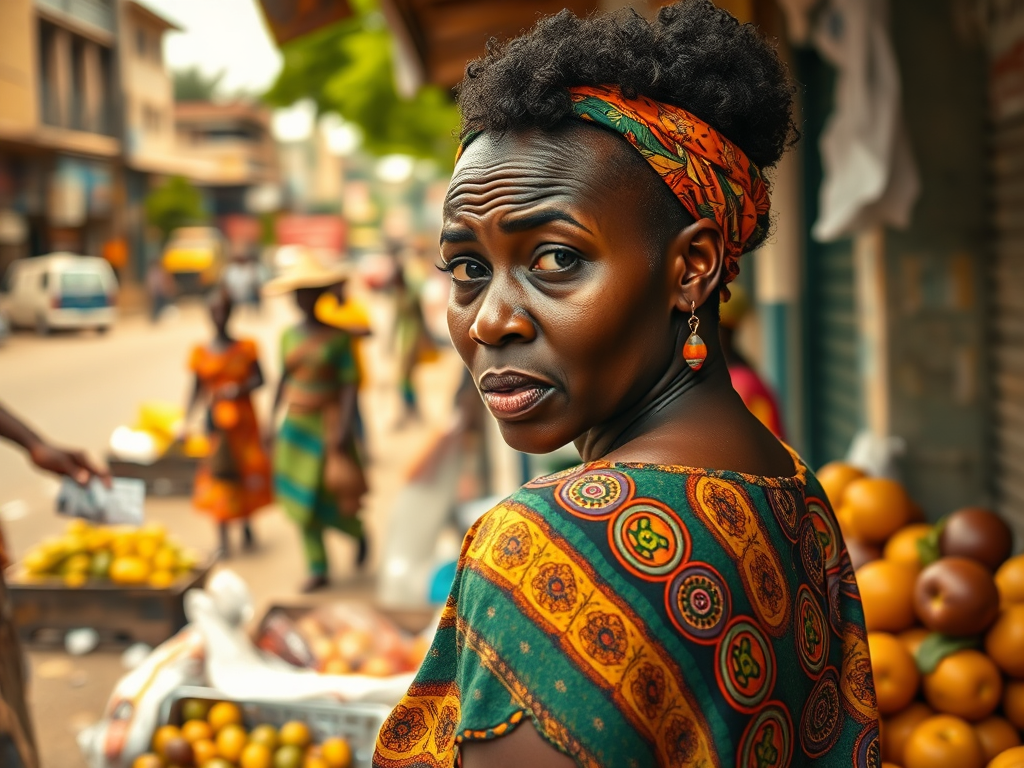
One particular day after the eviction, I passed by and saw her again. She was no longer sitting freely on her ‘lesu’ (Cloth). She was cautious, almost hiding, constantly looking over her shoulder for law enforcement. As I observed, I heard her pour out a deep heartfelt blessing to a customer who bought passion fruits worth two thousand Uganda shillings (Less than a US dollar) from a Kavera (Polythene) she removed from her bag. It seemed like the small sale had secured something essential for the day. I realized that for many of the roadside traders, a single transaction is not casual income but survival. The survival instinct draws them back to the streets even though their goods could be confiscated. Is it better to risk confiscation where customers exist, or to stay in a safe but empty space where survival is uncertain?
That is the cost of development. It is not just about policy, but survival. I understand the need for order. I have walked those same streets, struggling to find space, holding tightly onto my bag in crowded areas. Getting insults when I try to guard myself from falling from a push and stepping on a tomato. I also know that there is order in survival.
Development, by its nature, creates tension. It improves systems and structure, but it can also displace people and disrupt livelihoods. Alternative trading spaces were provided, but they came with practical challenges compared to those anticipated or imaginarily constructed during the eviction policy development process. Consumer behavior, for example, cannot be ignored. Many of us do not walk into a formal market to buy a single fruit. We respond to impulse busying and to accessibility.
Change, especially when it affects livelihoods, is never immediately comfortable. Adjustment requires time and viable alternatives. If change is to be accepted and sustained, particularly where it affects survival, it must be implemented with careful consideration.
This then draws me to six considerations for inclusive development in respect to our scenario:
- Accessibility of alternative locations- Customers must be able to reach the relocation site
- Viability of conditions such as infrastructure, safety, sanitation, and affordability
- Consistency in implementation: Policies must be applied fairly to avoid uncertainty and selective enforcement
- Addressing corruption: vulnerability can easily be exploited. Therefore, strong safeguards are required to protect the traders
- Effective sensitization: Clear communication helps communities understand the why of the change.
Final Reflection: That day, as I listened to that woman bless a customer for a two-thousand-shilling purchase; I understood that the cost of development is not measured in infrastructure or order, but in the lives that must adjust to it. Development is not just about improved systems but about carrying people through the change it brings.


 Hearts & Trade
Leave a comment